


Google Ads Marketing: How It Works and Why Your Business Needs It
Every time someone searches on Google, a real-time auction takes place in milliseconds — deciding which ads appear at the top and which businesses get noticed. If your brand isn’t competing in that auction, you’re handing potential customers directly to competitors who are.
Google Ads marketing is one of the fastest, most measurable ways to put your business in front of people already looking for what you offer. Unlike organic SEO, which builds momentum over months, a well-managed Google Ads campaign can generate qualified leads the same day it goes live.
In this guide, you’ll get a clear breakdown of how Google Ads works, why it’s a game-changer for local businesses, what professional management actually involves, and how to build a strategy that delivers real returns — not just clicks.
What Is Google Ads Marketing?
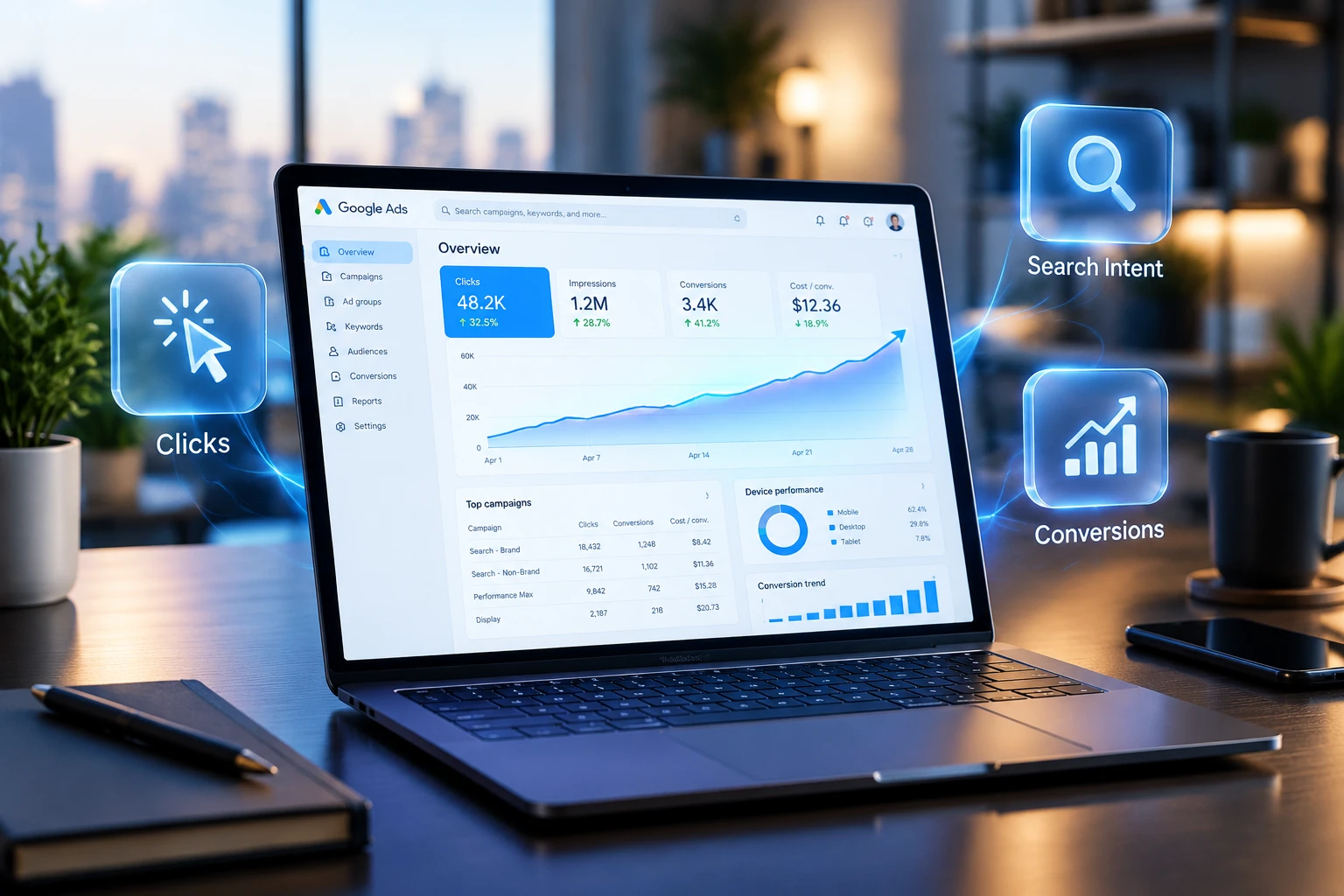
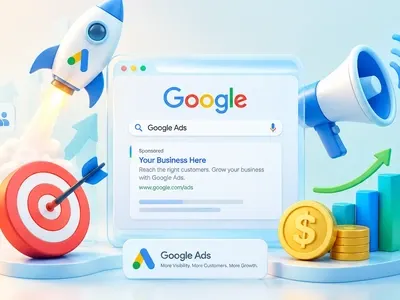
Google Ads marketing is the practice of creating and managing paid advertisements across Google’s platforms — including Search results, YouTube, Gmail, and the Google Display Network — to reach the right audience at exactly the right moment.
At its core, Google Ads operates on a pay-per-click (PPC) model. You bid on specific keywords, your ad appears when someone searches those terms, and you only pay when someone actually clicks. That’s a fundamentally different dynamic from traditional advertising, where you pay for exposure regardless of engagement.
What makes Google Ads marketing especially powerful is intent. Someone typing “digital marketing agency near me” into Google isn’t passively browsing — they’re actively making a decision. A billboard reaches a broad audience; a Google Ad reaches someone mid-decision. That difference in timing is everything.
Beyond Search, Google Ads also includes Display campaigns (visual banner ads across millions of websites), Shopping campaigns (product listing ads), and Video campaigns on YouTube, giving businesses multiple touchpoints across the buyer journey.
How Google Ads Works
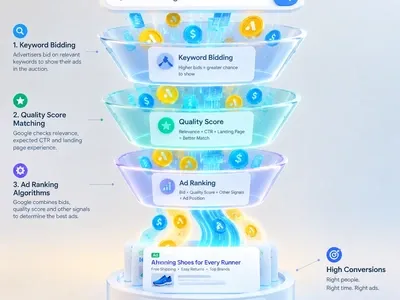
Understanding how Google Ads works starts with the auction. Every time a search is performed, Google runs an auction in milliseconds to determine which ads appear and in what order.
Your position in that auction isn’t purely about who bids the most. Google uses a metric called Ad Rank, calculated from:
- Your bid: The maximum amount you’re willing to pay per click
- Quality Score: A 1–10 rating based on expected click-through rate, ad relevance, and landing page experience
- Expected impact of ad extensions: Sitelinks, callouts, location info, and more
This means a well-crafted ad with a high-quality landing page can outrank a competitor who’s outbidding you — because Google rewards relevance. Advertisers who understand this consistently get better results for less spend.
Once a user clicks, Google charges slightly above what was needed to beat the next advertiser, not your full maximum bid. This second-price auction model keeps costs competitive.
The campaign structure breaks down like this:
- Campaign level — Budget, network, location targeting, and bidding strategy
- Ad Group level — Groups of related keywords with matching ads
- Keyword level — The search terms that trigger your ads
- Ad level — Headlines, descriptions, and display URLs the user sees
Getting this architecture right is foundational. Poor structure causes irrelevant clicks, wasted budget, and low Quality Scores — a costly spiral that’s entirely avoidable.
Types of Google Ads Campaigns
Google Ads marketing isn’t one-size-fits-all. The right campaign type depends on your goals and where your audience is in the buying journey.
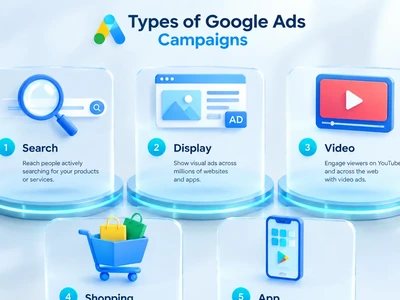
Search Campaigns — Text ads in Google Search results. The best starting point for capturing high-intent users actively looking for your product or service.
Display Campaigns — Visual ads served across Google’s network of over two million websites and apps. Excellent for brand awareness and retargeting.
Shopping Campaigns — Product listing ads showing images, prices, and store names. Essential for e-commerce.
Video Campaigns — Ads on YouTube and Google video partners. Ideal for brand storytelling and awareness-stage audiences.
Performance Max — Google’s AI-driven campaign type that runs across all channels simultaneously, optimizing toward your conversion goals.
Local Campaigns — Specifically designed to drive foot traffic and calls to physical locations. Which brings us to one of the biggest opportunities in paid search.
Google Ads for Local Business: A Powerful Growth Channel
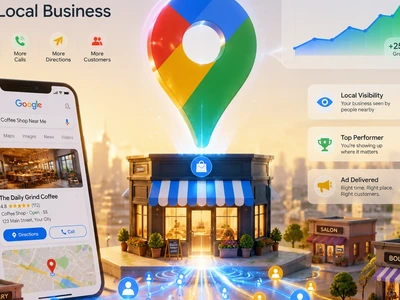
For businesses with a physical presence or a defined service area, Google Ads for local business delivers some of the highest ROI available in digital marketing.
The reason is simple: local search intent is strong. Searches like “digital marketing agency in [city]” or “SEO services near me” come from people who are ready to act. Google Ads for local business lets you capture that demand precisely, without paying to reach audiences outside your area.
Key features that make local campaigns effective:
- Location targeting: Show ads only to users in specific cities, ZIP codes, or within a set radius
- Location extensions: Display your address, phone number, and map pin directly in the ad
- Call extensions: Let mobile users tap to call you straight from search results
- Local Service Ads (LSAs): A Google product for select verticals that charges per lead rather than per click, and includes a verified badge
When properly configured, Google Ads for local business campaigns routinely outperform national campaigns on both cost-per-click and conversion rate — because the audience is more relevant and local competition is often lower.
Google Ads Management Services: What You’re Really Paying For
Many businesses try Google Ads independently and leave convinced the platform doesn’t work. In most cases, the platform worked fine — the management didn’t.
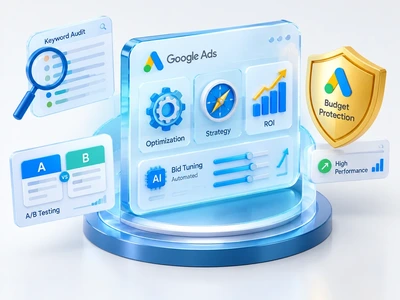
Professional Google Ads management services go well beyond creating a campaign. A proper engagement includes:
- Account structure and setup aligned with real business objectives
- Keyword research and negative keyword lists to target the right terms and filter irrelevant traffic
- Ad copy testing — A/B testing headlines and descriptions to find what actually converts
- Bid strategy management — choosing between manual CPC, target CPA, target ROAS, and adjusting based on live data
- Landing page alignment — making sure the destination page is built to convert, not just rank
- Transparent reporting tied to revenue KPIs, not just impressions
The real cost of poor Google Ads management isn’t the management fee — it’s the wasted ad spend. A $1,000/month budget managed poorly might return $2,000 in revenue. The same budget with expert Google Ads management services can consistently return 5–10x that amount.
How to Build a Winning Google Ads Marketing Strategy
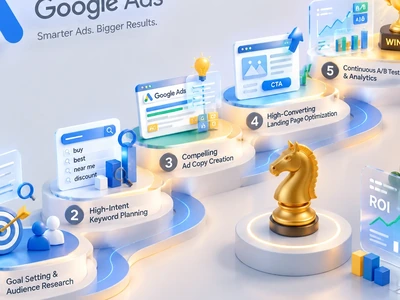
A strong Google Ads marketing strategy starts before any campaign goes live. Here’s the framework that separates high-performing accounts from ones that drain budget:
1. Define goals before you build
Leads, sales, calls, or store visits — each requires a different campaign type and bidding approach.
2. Layer your audience targeting
Use audience signals, customer match lists, and in-market segments to sharpen who sees your ads and when.
3. Match keywords to intent
Broad match keywords can expand reach but burn budget on irrelevant searches. Use phrase and exact match for control, and build robust negative keyword lists from day one.
4. Write ads for the searcher, not the product
People click ads that speak to their problem. Lead with benefits, not features. Test at least three headline variations per ad group.
5. Build dedicated landing pages
Sending traffic to your homepage is almost always a mistake. Each ad should point to a page that directly answers the user’s query and guides them toward one clear action.
6. Track every conversion
Google Ads marketing without proper conversion tracking is guesswork. Set up tracking for calls, form fills, purchases, and any other meaningful business action before spending a dollar.
Google Ads vs. Programmatic Advertising
A common question: how does Google Ads marketing compare to programmatic advertising, and when does each one make sense?
Both involve automated, data-driven ad buying — but they differ in scope. Google Ads operates within Google’s own ecosystem (Search, YouTube, Gmail, Display Network). It’s the right tool when you’re capturing demand through search intent or retargeting visitors across Google properties.
How does programmatic advertising work? It uses demand-side platforms (DSPs) to buy ad inventory across thousands of external publishers in real time. The advertiser sets parameters — audience, budget, bid limits — and the DSP automatically bids on available inventory across video, native, audio, connected TV, and display formats outside of Google’s network.
For most businesses, Google Ads marketing is the right starting point. Programmatic becomes valuable when you’re scaling brand awareness beyond what Google’s ecosystem alone can support.
Why Partner With a Google Ads Marketing Agency?
Running Google Ads marketing in-house is possible. Running it well, consistently, while managing a business, is genuinely difficult.
An experienced agency brings:
- Specialists who work inside Google Ads every day across multiple industries
- Cross-account benchmarking data that shows what’s actually working at scale
- Proven testing frameworks for ad copy, landing pages, and audience segments
- Access to Google beta features for eligible accounts
- Time — often the most valuable resource for a growing business
At Spinoways, we build performance-driven Google Ads marketing campaigns around your revenue targets, not vanity metrics. Every campaign starts with a clear goal, a structured build, and a commitment to continuous optimization.
The Bottom Line
Google Ads marketing is one of the most direct paths from ad spend to measurable business growth — when it’s executed with strategy and discipline. The platform rewards relevance, precision, and consistency. It penalizes guesswork and neglect.
Whether you’re a local business looking to dominate search in your city or a growing brand ready to scale nationally, the fundamentals don’t change: know your audience, match intent, test every variable, and track what matters.
Ready to make your ad budget work harder? [Get a Free Google Ads Audit from Spinoways →]