




Content Marketing for Small Businesses: A Practical Strategy to Grow Your Business
Small businesses often have to compete with companies that have larger budgets, bigger teams, and stronger brand recognition. That does not mean a smaller company has to spend more to be visible. A focused content strategy can help a business answer customer questions, earn organic visibility, build trust, and turn website visitors into qualified leads.
Content marketing for small businesses works best when it is treated as a business growth system rather than a schedule for publishing random blog posts. The goal is not to create more content. The goal is to create the right content for the right audience, at the right stage of the buying journey.

What Is Content Marketing for Small Businesses?
Content marketing is the process of creating and distributing useful, relevant information that attracts a clearly defined audience and supports business goals. That information can include blog posts, service guides, case studies, videos, email content, social posts, comparison pages, and downloadable resources.
For a small company, content marketing for small businesses can be especially valuable because useful content can continue attracting visitors after it is published. A strong article may rank for multiple related searches, answer questions before a sales conversation, and give prospects a reason to trust a brand.
The key is relevance. Your content should be built around real customer problems, not simply around keywords. Google recommends people-first content that provides substantial value, originality, expertise, and a satisfying experience.
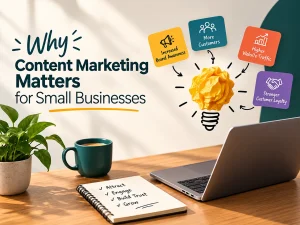
Why Content Marketing Matters for Small Businesses
A small business does not need to dominate every search result. It needs to become visible for searches that are relevant to its products, services, market, and customers.
A good strategy for content marketing for small businesses can support several goals:
Build organic visibility
Helpful pages can attract search traffic for informational and commercial queries. Over time, a well-organized content library can create multiple entry points to your website.
Create authority
Detailed answers demonstrate that your business understands the problems customers are trying to solve. This is especially important when prospects are comparing providers and looking for evidence that a company knows its industry.
Support sales
A prospect can use guides, examples, FAQs, and comparisons to become more informed before contacting your team. Good content can answer basic objections before they reach a sales conversation.
Reduce dependence on paid traffic
Content can create an additional acquisition channel that continues working after publication. Unlike a paid campaign, a useful organic page can continue attracting visitors without paying for every click.
Strengthen other marketing channels
A single piece of content marketing for small businesses can be repurposed into social posts, email content, videos, sales resources, and local marketing assets.
The important point is to connect content to measurable business outcomes. Traffic alone is not the finish line. Look at qualified visits, engagement, inquiries, booked calls, form submissions, and revenue where reliable tracking is available.

How to Build a Small Business Content Strategy
The strongest content marketing for small businesses begins with research. Before writing, define who you want to reach, what they need, and what action you want them to take.
1. Define Your Audience and Buying Journey
Start with customer questions. What does someone search before they know your company? What do they compare before buying? What objections stop them from contacting you?
Organize these questions into stages:
- Awareness: What is this problem and how can I solve it?
- Consideration: Which solution or provider is right for me?
- Decision: Why should I choose this company?
- Retention: How do I get more value from what I purchased?
This approach prevents your blog from becoming a collection of disconnected topics.
2. Choose Topics Using Search Demand
Keyword research helps you understand how people describe their problems. But search volume should not be the only criterion.
Look for a combination of relevance, competition, intent, and business value. A keyword with modest volume can be more valuable than a high-volume term if it attracts people who are ready to become customers.
For content marketing for small businesses, build topic clusters instead of publishing isolated articles. A broad pillar topic can link to narrower guides covering strategies, examples, tools, local opportunities, and measurement.
3. Match Content to Search Intent
Search intent describes what the searcher is trying to accomplish. A person searching for “content marketing examples” needs a different page from someone searching for “content marketing agency for small business.”
Before writing, review the current search results and ask:
- What type of content ranks?
- Are results mostly guides, service pages, lists, videos, or comparisons?
- What questions do the ranking pages answer?
- What useful information is missing?
Your article should satisfy the intent better, not simply repeat what already exists.
Content Marketing Strategies for Small Business
Once your topics are mapped, choose formats that match your audience and resources. There is no universal publishing formula. A local service company may benefit from location-specific guides and customer FAQs, while a B2B company may get more value from case studies and in-depth educational content.
Here are practical content marketing strategies for small business owners:
Create Problem-Solving Guides
Answer the questions customers ask repeatedly. If your sales team receives the same question every week, it may be an excellent content opportunity.
Publish Original Examples
Show how a process works using real situations, screenshots, data, or lessons learned. Original examples can make your content more useful than generic articles that simply summarize information found elsewhere.
Build Comparison Content
Help prospects understand differences between solutions, approaches, or service options. Comparison content can be particularly valuable when customers are close to making a purchasing decision.
Create Local Content
If you serve a geographic market, publish useful resources tied to the problems and needs of that community. This can support both organic visibility and local relevance.
Refresh Existing Pages
Improving an existing article can be more efficient than constantly creating new content. Review older pages for outdated information, missing sections, weak internal links, and opportunities to better satisfy search intent.
Repurpose Strong Content
Turn one well-researched article into multiple assets. You can extract statistics, tips, short videos, social posts, email ideas, FAQs, and sales resources from the same research.
The best content marketing for small businesses is not necessarily the content that takes the longest to produce. It is the content that provides meaningful value while supporting a clear business objective.
How Local Businesses Can Use Content
Local companies have an important advantage: their content can be highly specific. Instead of trying to compete for broad national terms, a local business can answer questions connected to its service area.
For example, a home services company could create guides about seasonal maintenance, common local problems, service costs, preparation checklists, and questions customers should ask before hiring a provider.
Local content should not be a collection of pages with city names inserted into the same template. Each location page should provide genuinely useful local information. This makes local business content marketing more helpful to users and gives the business more opportunities to demonstrate relevance.
Content can also support a broader local SEO strategy. Google says complete and accurate Business Profile information, reviews, and photos can help businesses stand out in local search. Your website content should work alongside—not replace—your local presence.
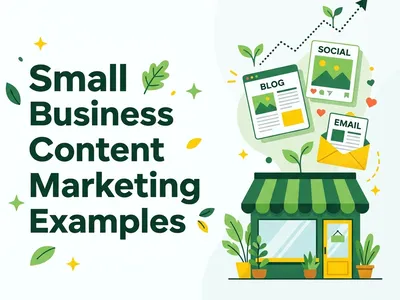
Small Business Content Marketing Examples
Imagine a small accounting firm that wants to attract business owners. Instead of publishing generic posts such as “Why Accounting Is Important,” it could build a useful resource library:
- How to Prepare Your Business for Tax Season
- Cash Flow Mistakes Small Businesses Should Avoid
- Bookkeeping Checklist for a Growing Business
- Questions to Ask Before Hiring an Accountant
- Small Business Cash Flow: A Practical Guide
Each article answers a specific problem. Together, they create topical depth and provide multiple entry points into the website.
An e-commerce business could use a similar model with buying guides, product comparisons, care instructions, FAQs, and educational resources. A local professional service could combine educational articles with case studies, service pages, and location-specific resources.
The important lesson from these small business content marketing examples is consistency of purpose. Every page should have a reason to exist.
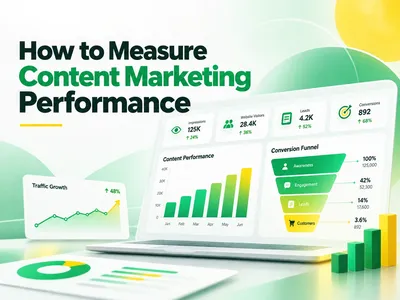
How to Measure Content Marketing Performance
A content strategy needs measurement. Start by establishing a baseline before publishing and then track changes over time.
Useful metrics include:
- Organic impressions and clicks from Google Search Console
- Organic traffic by landing page
- Keyword rankings for priority topics
- Engagement and user behavior
- Leads and qualified inquiries
- Conversion rate from organic traffic
- Revenue or pipeline influenced by organic content
- Backlinks and referring domains
Do not judge an article only by its first few weeks of traffic. Some pages take time to gain visibility, especially when a site is still building authority. Look at trends and business outcomes rather than chasing daily ranking fluctuations.
For content marketing for small businesses, measurement should also answer a bigger question: is the content attracting the right audience? A page that receives fewer visits but generates qualified leads may be more valuable than a page with thousands of irrelevant visitors.
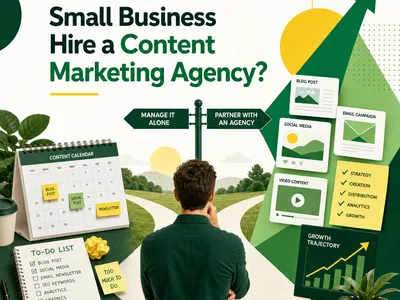
When Should a Small Business Hire a Content Marketing Agency?
You can create content internally, but there is a point where strategy, research, writing, optimization, publishing, and measurement become difficult to manage consistently.
A content marketing agency for small business can help when you need a repeatable system for:
- Keyword research and topic mapping
- Competitor and content-gap analysis
- SEO content creation
- On-page optimization
- Internal linking
- Content updates and performance optimization
- Conversion-focused copy
- Performance reporting
For content marketing for small businesses, the right agency should understand that publishing more articles is not automatically the answer. The strategy should connect content to the company’s audience, services, search opportunities, and growth goals.
At Spinoways, our content marketing process is built around audit and discovery, strategy and planning, expert creation, SEO optimization, distribution, and performance improvement. Our content service also covers keyword research, content briefs, on-page SEO, internal links, image alt text, and publishing.
How to Create a Sustainable Content Plan
Consistency is easier when your plan is realistic. A small business does not need to publish five times a week if its team cannot maintain quality.
Start with a manageable schedule. For example, create one high-quality article each week or every two weeks, depending on your resources. Prioritize topics that have clear relevance to your customers and commercial potential.
Use a content calendar with fields for:
- Primary topic and secondary keywords
- Search intent
- Target audience
- Content format
- Internal links
- External sources
- CTA
- Author or reviewer
- Publication date
- Update date
- Performance notes
This turns content marketing for small businesses into an operating process instead of an occasional project.
A sustainable system also makes it easier to identify which topics deserve updates, which pages need stronger internal links, and which content should be expanded into supporting articles.

Final Takeaway
Effective content marketing for small businesses is about being useful before being promotional. The strongest articles answer real questions, demonstrate expertise, connect naturally to relevant services, and give readers a clear next step.
Start with customer problems. Research the search landscape. Build topic clusters. Create genuinely useful content. Connect related pages with descriptive internal links. Measure qualified traffic and conversions. Then update what works and improve what does not.
When those pieces work together, content becomes more than a collection of blog posts. It becomes a long-term asset that can improve visibility, support trust, strengthen your website, and create opportunities for sustainable business growth.